

ASTM A193 Grade B16
Vanadium-strengthened Cr-Mo bolting that holds its strength where B7 starts to relax — steam turbines, HP steam flanges and hot valve bonnets.
What A193 B16 is.
ASTM A193 Grade B16 is a chromium-molybdenum-vanadium alloy steel developed for bolting that operates hot for a long time. The vanadium addition and the higher molybdenum content give B16 much better creep and stress-relaxation resistance than B7 above roughly 800 °F, so bolted joints keep their clamp load through years of steam service.
It is the standard choice for steam turbine casings, high-pressure and high-temperature steam piping, and valve bonnets in power generation. We machine B16 from certified bar and heat treat to the specification, with tempering at 1200 °F minimum after threading.
Chemical composition.
| Element | Symbol | Min % | Max % |
|---|---|---|---|
| Carbon | C | 0.36 | 0.47 |
| Manganese | Mn | 0.45 | 0.70 |
| Phosphorus | P | — | 0.035 |
| Sulfur | S | — | 0.040 |
| Silicon | Si | 0.15 | 0.35 |
| Chromium | Cr | 0.80 | 1.15 |
| Molybdenum | Mo | 0.50 | 0.65 |
| Vanadium | V | 0.25 | 0.35 |
| Aluminum | Al | — | 0.015 |
Values per ASTM A193/A193M-24, Tables 1 and 2 (verified against the specification). Confirm the edition called out on your purchase order with our estimating team.
Mechanical properties.
| Nominal diameter (in.) | Tensile strength, min (ksi) | Yield strength 0.2% offset, min (ksi) | Elongation in 4D, min (%) | Reduction of area, min (%) | Hardness, max |
|---|---|---|---|---|---|
| 2½ and under | 125 | 105 | 18 | 50 | 321 HBW / 35 HRC |
| Over 2½ to 4 | 110 | 95 | 17 | 45 | 321 HBW / 35 HRC |
| Over 4 to 8 | 100 | 85 | 16 | 45 | 321 HBW / 35 HRC |
Values per ASTM A193/A193M-24, Tables 1 and 2 (verified against the specification). Confirm the edition called out on your purchase order with our estimating team.
Specifications that apply.
How A193 B16 ships from Houston.
- Full-thread studs and stud bolts
- Double-end and tap-end studs
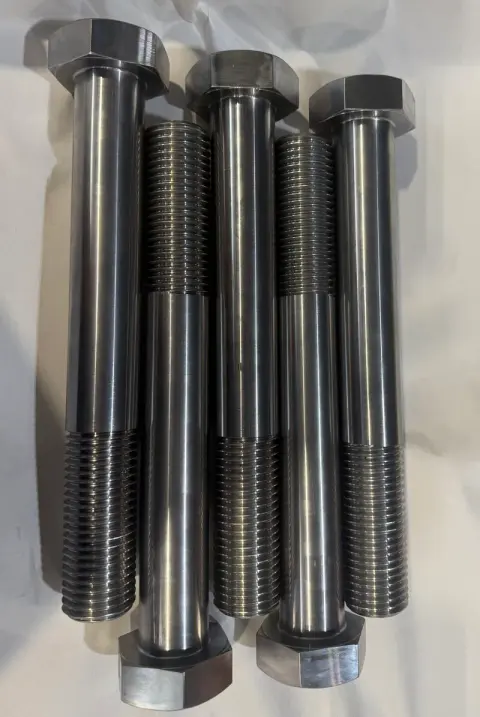
- Hex and heavy hex bolts
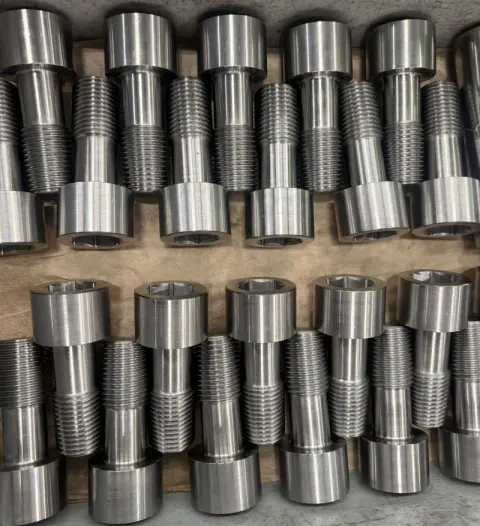
- Socket head cap screws
- Threaded rod (cut and rolled thread)
- Machined components from certified bar
A193 B16 fasteners we make.
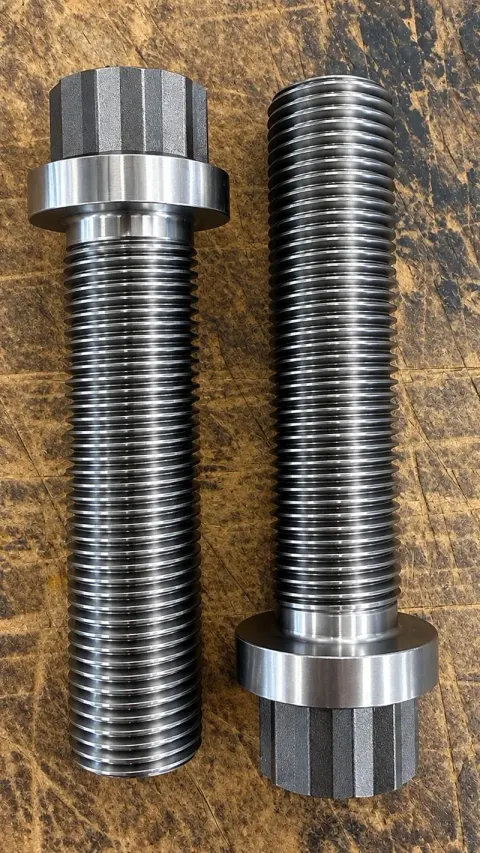
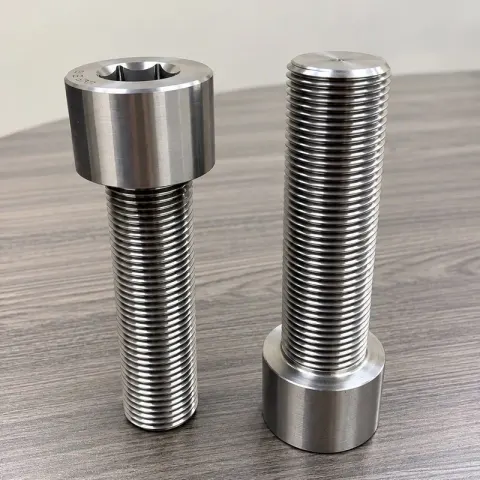
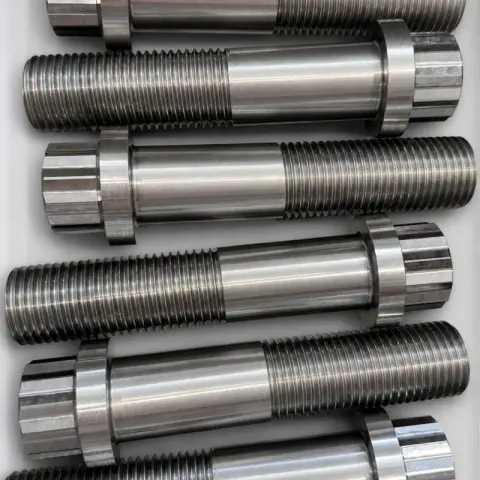
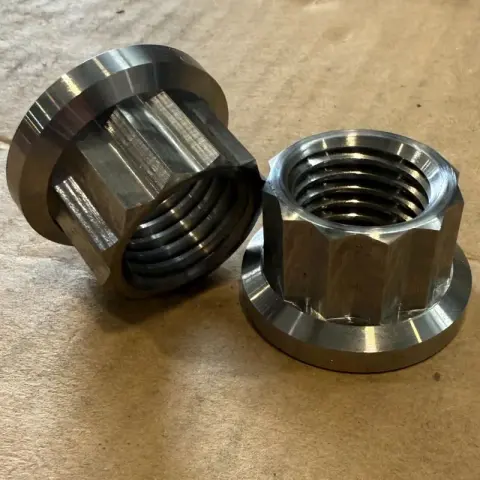
Every item is manufactured to your drawing or standard in A193 B16, imperial or metric, with an EN 10204 3.1 certificate.
What is ASTM A193 B16?
B16 is A193's chromium-molybdenum-vanadium grade. It shares the 125 ksi minimum tensile strength and 35 HRC hardness cap of B7, but its alloy content is tuned for high-temperature stability: about 0.5 to 0.65 percent molybdenum and 0.25 to 0.35 percent vanadium form fine, stable carbides that resist coarsening at temperature. The tempering temperature is also higher, 1200 °F minimum, which is what lets B16 be used above the temper of B7 without losing properties in service.
When to specify B16 over B7
Both grades have the same room-temperature strength, so the decision is about temperature and time. Up to roughly 800 °F B7 is the economical choice. Between 800 and 1100 °F, and anywhere a joint must hold clamp load for years without retorquing, B16's relaxation resistance pays for itself. Steam turbine manufacturers, boiler codes and many utility bolting specifications call for B16 by name in that range.
Nuts for B16 studs
Pair B16 with ASTM A194 Grade 7 (Cr-Mo) or Grade 4 (C-Mo) heavy hex nuts, both of which are rated for elevated temperature. Grade 2H carbon steel nuts are acceptable in many specifications up to their own temperature limit, but for the hottest joints the Cr-Mo nut is the safer match.
Testing, certification and marking
- Tensile and hardness tested per heat-treat lot on the finished product
- Grade symbol B16 and manufacturer's identification on every piece
- EN 10204 3.1 material test report with heat traceability; 3.2 witness available
- Stress-rupture or elevated-temperature testing arranged through our laboratory partners on request
Recent A193 B16 jobs.
ASTM A193 Grade B7
The workhorse alloy-steel bolting grade for flanges, valves and pressure equipment — 125 ksi tensile, quenched and tempered 4140.
ASTM A194 / ASME SA-194ASTM A194 Grade 7
The Cr-Mo heavy hex nut — same 4140 steel as a B7 stud, rated for elevated temperature and the usual match for B16 and L7.
ASTM A194 / ASME SA-194ASTM A194 Grade 4
A carbon-molybdenum nut grade withdrawn from ASTM A194 — kept here for legacy drawings; Grade 7 is the current alloy-steel nut for B7 and L7 studs.