

17-4 PH Stainless (Type 630, UNS S17400)
The high-strength stainless — up to 190 ksi in H900, or 115 to 135 ksi with real toughness in the H1150 conditions — for pump shafts, valve stems, subsea and aerospace fasteners.
What 17-4 PH is.
17-4 PH is a chromium-nickel-copper martensitic stainless steel that is hardened by a simple low-temperature age rather than a quench. Solution treated at 1900 °F it machines readily at about 35 HRC; a single 900 °F age then takes it to 190 ksi tensile and 40 HRC, or a 1150 °F age trades strength for ductility and impact toughness. Corrosion resistance is close to 304 in most atmospheres, short of 316 in chlorides.
For bolting, ASTM A1082 defines eight conditions from H900 to H1150M. We machine 17-4 from certified A564 bar and have it aged to the ordered condition, so the condition on your order is the condition on the certificate.
Chemical composition.
| Element | Symbol | Min % | Max % |
|---|---|---|---|
| Carbon | C | — | 0.07 |
| Manganese | Mn | — | 1.00 |
| Phosphorus | P | — | 0.040 |
| Sulfur | S | — | 0.030 |
| Silicon | Si | — | 1.00 |
| Chromium | Cr | 15.0 | 17.0 |
| Nickel | Ni | 3.0 | 5.0 |
| Copper | Cu | 3.0 | 5.0 |
| Niobium + tantalum | Nb+Ta | 0.15 | 0.45 |
Values per ASTM A1082/A1082M-16(2021) Table 1 (verified against the specification). Confirm the edition called out on your purchase order with our estimating team. ASTM A564 bar allows chromium 15.00–17.50.
Mechanical properties.
| Condition | Aging treatment | Tensile strength, min (ksi) | Yield strength, min (ksi) | Elongation, min (%) | Reduction of area, min (%) | Hardness, min | Charpy V-notch, min (ft·lbf) |
|---|---|---|---|---|---|---|---|
| H900 | 900 °F, 1 h | 190 | 170 | 10 | 35 | 40 HRC / 388 HBW | — |
| H925 | 925 °F, 4 h | 170 | 155 | 10 | 38 | 38 HRC / 375 HBW | 5 |
| H1025 | 1025 °F, 4 h | 155 | 145 | 12 | 45 | 35 HRC / 331 HBW | 15 |
| H1075 | 1075 °F, 4 h | 145 | 125 | 13 | 45 | 32 HRC / 311 HBW | 20 |
| H1100 | 1100 °F, 4 h | 140 | 115 | 14 | 45 | 31 HRC / 302 HBW | 25 |
| H1150 | 1150 °F, 4 h | 135 | 105 | 16 | 50 | 28 HRC / 277 HBW | 30 |
| H1150D | 1150 °F, 4 h, air cool, then 1150 °F, 4 h | 125 | 105 | 16 | 50 | 24–33 HRC / 255–311 HBW | 30 |
| H1150M | 1400 °F, 2 h, air cool, then 1150 °F, 4 h | 115 | 75 | 18 | 55 | 24 HRC / 255 HBW | 55 |
Values per ASTM A1082/A1082M-16(2021) Table 3 (verified against the specification). Confirm the edition called out on your purchase order with our estimating team. Aging temperatures ± 25 °F; times are minimums at temperature; air or gas cool. Applies to 8 in. thickness and under.
| Condition | Solution treatment | Hardness, max |
|---|---|---|
| A (solution treated) | 1900 ± 25 °F (1040 °C), cool to below 90 °F | 38 HRC / 363 HBW |
Values per ASTM A1082/A1082M-16(2021) Table 2 (verified against the specification). Confirm the edition called out on your purchase order with our estimating team.
Specifications that apply.
How 17-4 PH ships from Houston.
- Studs, hex bolts and cap screws in any A1082 condition
- Socket head cap and shoulder screws
- Hex nuts (proof tested to S5 on request)
- Pump, valve and instrument components machined to print
- Certified A564 bar, solution treated or aged
17-4 PH fasteners we make.
Every item is manufactured to your drawing or standard in 17-4 PH, imperial or metric, with an EN 10204 3.1 certificate.
What is 17-4 PH?
17-4 PH (Type 630, UNS S17400) is the most widely used precipitation-hardening stainless steel. It contains about 16 percent chromium, 4 percent nickel and 4 percent copper with a niobium addition. After solution treatment the structure is a soft martensite; ageing between 900 and 1150 °F precipitates copper-rich particles that raise the yield strength sharply. Because the hardening step is a low-temperature age with no quench, parts can be finish machined in the solution-treated condition and hardened afterwards with negligible distortion.
Choosing a condition
- H900: maximum strength, 190 ksi and 40 HRC, but the lowest toughness. Wear parts and highly loaded small fasteners.
- H1025 and H1075: the general-purpose engineering conditions, 145 to 155 ksi with 15 to 20 ft·lbf Charpy.
- H1150: best ductility of the single-age conditions, 135 ksi, 30 ft·lbf.
- H1150D and H1150M: double or over-aged for stress-corrosion and sour-service resistance; H1150M gives 55 ft·lbf at 24 HRC and is the condition normally accepted under NACE MR0175.
Corrosion and galling
17-4 PH resists atmospheric, fresh-water and mild chemical corrosion about as well as 304, and better than the martensitic 410 family, but it is not a substitute for 316 or duplex in chlorides. Like all stainless steels it galls against itself; use an anti-seize or a dissimilar nut such as Nitronic 60.
Testing, certification and marking
- Tensile and hardness tested per lot on the finished product
- Grade or alloy marking 17-4 with the condition suffix (A1082 Table 5: 174A for H900, 174G for H1150, and so on) and manufacturer's identification on every piece
- EN 10204 3.1 material test report with heat number and chemistry; 3.2 witness available
- Age-hardening cycle and condition recorded on the certificate
- Charpy impact testing to A1082 S1 on request
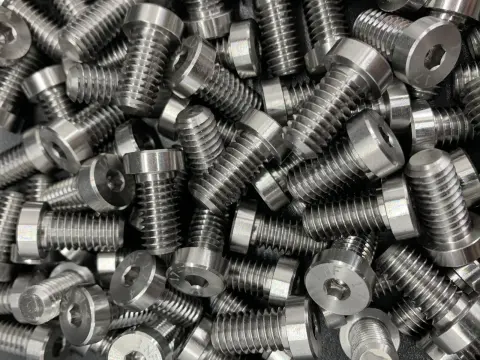
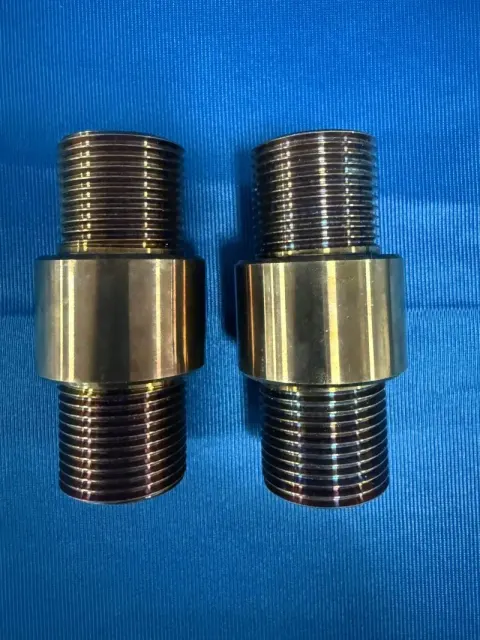
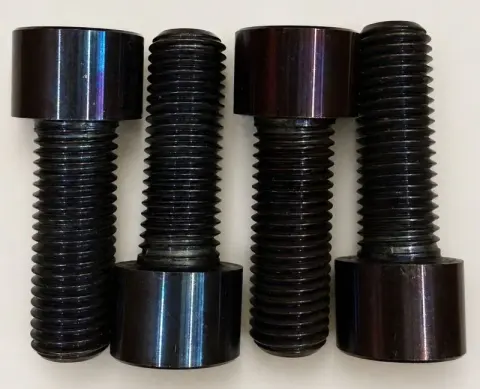
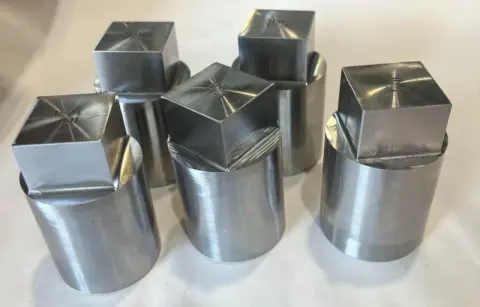
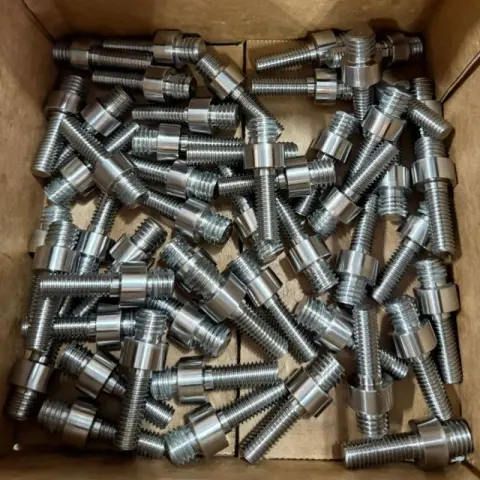
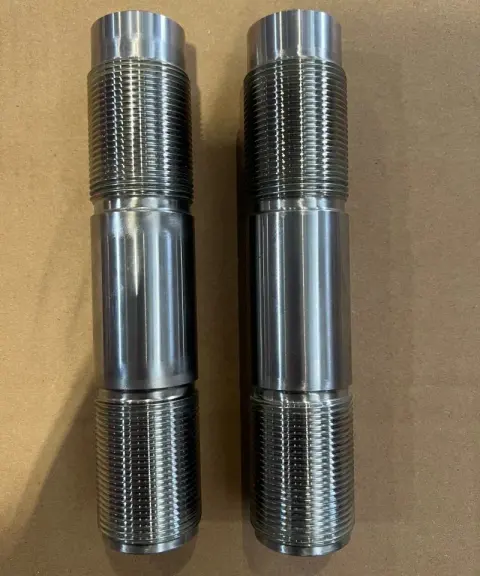
Recent 17-4 PH jobs.
Duplex 2205 Stainless (UNS S31803 / S32205)
Twice the yield strength of 316 with far better chloride stress-corrosion resistance — the standard duplex for offshore, seawater and sour-service bolting.
ASTM A1082 bolting · ASTM A276 / A479 bar · ASTM A182 F53Super Duplex 2507 Stainless (UNS S32750)
25 Cr super duplex with a PREN above 40 — 116 ksi tensile and 80 ksi yield for the most aggressive seawater, sour and chloride bolting.
ASTM A193 / ASME SA-193ASTM A193 Grade B8M Class 1 (316 Stainless)
316 stainless bolting with molybdenum for chloride and pitting resistance — offshore, marine, chemical and coastal plant fasteners.