12-Point Flange Nuts
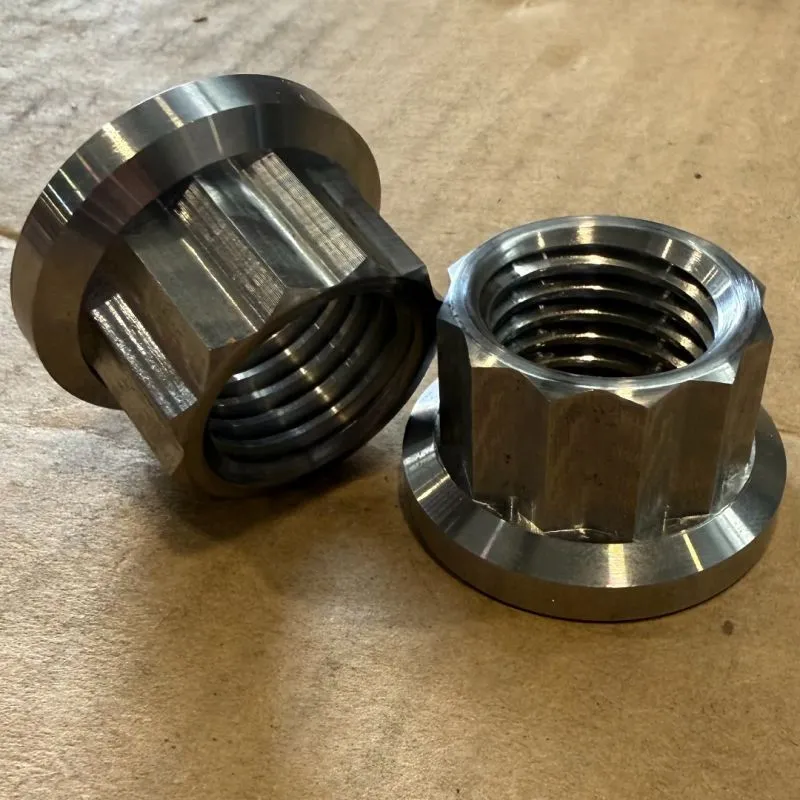
The mating nut for 12-point flange screws: a 12-point wrenching head with an integral washer face.
A 12-point flange nut carries the same double-hex wrenching form as a 12-point flange screw, so one socket drives both ends of the joint. The integral flange spreads the load on the joint face and removes the need for a separate washer, and the 12-point form takes higher torque in less radial space than a hex nut of the same thread size.
Standards.
What are 12-point flange nuts?
A 12-point flange nut is a nut whose wrenching surface is a double hexagon rather than a plain hex, with a flange formed on the bearing face. The double-hex form gives twelve driving points, so a 12-point socket engages at 30 degree intervals and the drive is spread over more corners. That lets the nut be tightened harder with less risk of rounding, and it can be reached in the tight quarters that engine and turbine bolting create. The flange takes the place of a washer, so the joint has one fewer loose part and the bearing pressure on the joint face is lower.
Other names
- Double-hex flange nut
- 12-point nut
- Bi-hex flange nut
- Ferry head nut (after the screw pattern)
Tips for purchasing
- Specify the mating screw size and thread series; the across-flats size follows the IFI 115 screw, not a hex nut table.
- Match the nut grade to the screw: A194 2H with B7 screws, A194 8 series with B8 screws, and the same alloy for nickel-alloy sets.
- State whether the flange is to be plain or serrated; plain is standard for machined nuts.
- Black oxide is the usual finish on alloy steel; ask for PTFE or zinc where the joint sees weather.
Materials.
Representative capabilities — every item is manufactured or certified to your specification. Confirm requirements with our estimating team.