

Ferrite content and phase balance
Duplex stainless is made of two phases, ferrite and austenite, in roughly equal parts. Heated or cooled wrongly, it can be spoiled by intermetallic phases such as sigma. These tests measure the phase balance and show that no harmful phase is present. For austenitic stainless that must be non-magnetic, a permeability test checks how strongly it responds to a magnet.
Count it, etch it, break it, corrode it.
- STEP 01
Polish a section
A section is cut, mounted, polished and etched so the ferrite and austenite can be told apart under the microscope.
- STEP 02
Point count
A grid of regularly spaced points is laid over many fields, and the share of points on ferrite is an unbiased estimate of the ferrite fraction (ASTM E562). Automatic image analysis (ASTM E1245) does the same by computer.
- STEP 03
Etch screen (A923 Method A)
A sodium hydroxide etch shows whether intermetallic phase is present. It can accept material, but not reject it.
- STEP 04
Charpy or corrosion test (Methods B and C)
Method B breaks Charpy specimens at −40 °F (−40 °C). Method C exposes a sample to ferric chloride for 24 hours and allows a corrosion rate of no more than 10 mg/dm² per day. Harmful phase shows as low toughness or as pitting.
- STEP 05
Permeability (austenitic parts)
For parts that must be non-magnetic, relative permeability is measured to ASTM A342, for example with an indicator that compares the part with calibrated inserts.
- Magnetic ferrite gauges have limited reliability on duplex unless they are checked against reference pieces of the same shape whose ferrite was measured by point count. Magnetic Ferrite Numbers (AWS A4.2, ISO 8249) are for weld metal.
- Intermetallic phases are non-magnetic, so a magnetic reading cannot find sigma directly.
- ASTM A923 covers the standard and super duplex grades it lists; lean duplex grades such as 2304 are tested to ASTM A1084.
Same chemistry, different structure.
Duplex can form intermetallic phases that cut its toughness and corrosion resistance. It happens when the steel is held between about 600 and 1750 °F (320 and 955 °C) or cooled too slowly (ASTM A923, A479). Meeting the chemistry and strength of the product specification does not prove these phases are absent, which is why the A923 tests exist.
Duplex bolting is supplied solution annealed and water quenched (ASTM A1082). The bar and bolting specifications set no ferrite range and do not require A923 by default. A479 supplementary requirement S6 leaves the test method and acceptance to agreement, and A182 S12 applies A923 to duplex forgings when it is ordered. The ferrite range comes from the purchaser's specification.
Austenitic stainless has its lowest permeability when annealed (ASTM F837), and cold-worked screws may not meet a permeability limit and their strength together. F837 S3 limits annealed screws to 1.05 at 100 oersteds; F593 and F594 offer 1.5 at 100 oersteds.
Grades and specifications.
What the report shows.
- Ferrite percentage and the counting method.
- For ASTM A923: the method (A, B or C) and its result, as an etch classification, an impact energy or a corrosion rate.
- For permeability: the relative permeability, the A342 method and, where the method needs it, the field strength.
How to ask for it.
- For duplex, give the ferrite range from your specification and ask for ASTM A923 with the method, or A1084 for lean duplex.
- For non-magnetic parts, give the maximum relative permeability and the field, for example 1.05 max at 100 oersteds, or name the supplementary requirement, such as F837 S3.
- Put it on the order up front. A phase-balance requirement placed on bar while the mill makes it costs less than testing stock afterwards.
Ferrite content and phase balance: common questions.
What ferrite content should duplex have?
The bar and bolting specifications do not set one; the range comes from the purchaser's specification. As a guide, 2205 mill product typically contains 40 to 50% ferrite.
Can a ferrite meter find sigma phase?
No. Intermetallic phases are non-magnetic. A low ferrite reading can hint that ferrite has turned into intermetallic phase, but it takes an A923 etch, impact or corrosion test to show it.
Is A923 Method A enough on its own?
Only to accept material: the etch can pass a sample but cannot reject one. Material that does not pass the etch screen goes on to the Charpy test (Method B) or the ferric chloride test (Method C).
What is a Ferrite Number?
A magnetic measure of ferrite in austenitic and duplex weld metal, from instruments calibrated to AWS A4.2 or ISO 8249.
Often ordered with it.
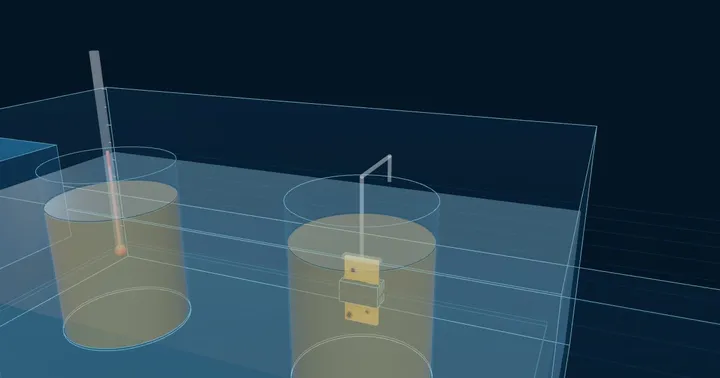
Pitting corrosion testing
Samples are exposed to ferric chloride solution to rank their resistance to pitting and crevice corrosion, or tested at a series of temperatures to find the critical pitting temperature. It is used on duplex, super duplex, 6% molybdenum austenitic grades and nickel alloys, and it shows whether the material lives up to its PREN.
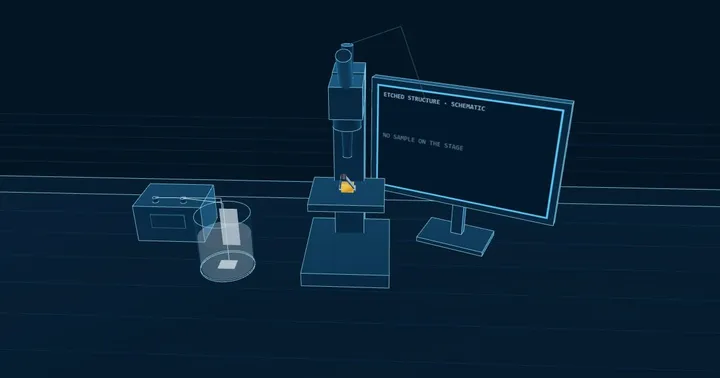
Intergranular corrosion testing
Austenitic stainless that has formed chromium carbides along its grain boundaries can corrode along them. ASTM A262 screens with an oxalic acid etch (Practice A) and tests with acid exposures. Stainless bar and fastener specifications name Practice E: a copper–copper sulfate–sulfuric acid exposure followed by a bend test. Nickel alloys such as 625 and C-276 are tested to ASTM G28.
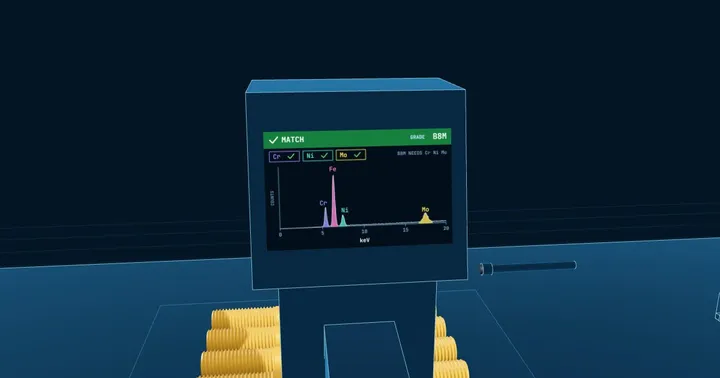
Positive Material Identification (PMI)
A handheld X-ray fluorescence analyser reads the chemistry of the finished part in seconds and matches it to the grade. It confirms that a B7 is chromium-molybdenum steel and not plain carbon, that a B8M has its molybdenum, and that a nickel-alloy stud is the alloy on the certificate. Handheld XRF does not read carbon, so carbon is confirmed from the mill certificate or by spark (OES) analysis.