High-speed circular sawing
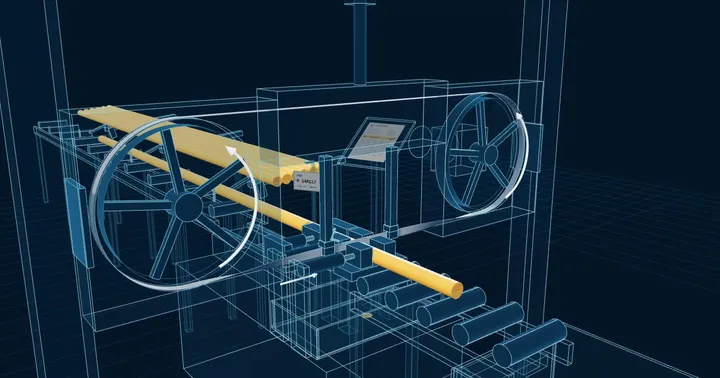
Alongside our band saws, an automatic high-speed circular saw with a carbide-tipped disc cuts certified bar into blanks in our Houston shop. Bars are loaded one at a time from a magazine; the saw feeds each bar to length, clamps it and cuts it, and each blank drops down a chute into a bin. The heat number from the mill certificate stays with every piece.
Load, feed, clamp, cut, keep the heat.
- STEP 01
Check the bar in
The mill certificate is checked and the heat number recorded before the bar is used. Stainless bar arrives stamped or tagged with its heat number and grade (ASTM A484). Bars of the heat wait on the saw's magazine and are loaded onto the feed line one at a time.
- STEP 02
Feed to length
The feed vise grips the bar and pushes it forward the length set on the control, through the open main vise and past the blade line. The main vise then clamps the bar on both sides of the blade line, so nothing moves during the cut.
- STEP 03
Cut
The blade head slides across the bar at a steady rate, so the carbide-tipped disc cuts through it from the side. Each tooth takes a thin chip, which curls into the gullet in front of it and is thrown out as the tooth leaves the cut. A fine oil mist goes on the teeth, and a wire brush on the far side of the disc clears the gullets.
- STEP 04
Down the chute
The head slides back and the main vise opens. The feed vise pushes the bar on by the next length, which pushes the cut blank off the bed: it drops onto an inclined grated chute and slides down into the bin, and the chips fall through the grate. The cycle repeats to the quantity on the job, and when a bar is used up the magazine loads the next.
- STEP 05
Keep the heat with every piece
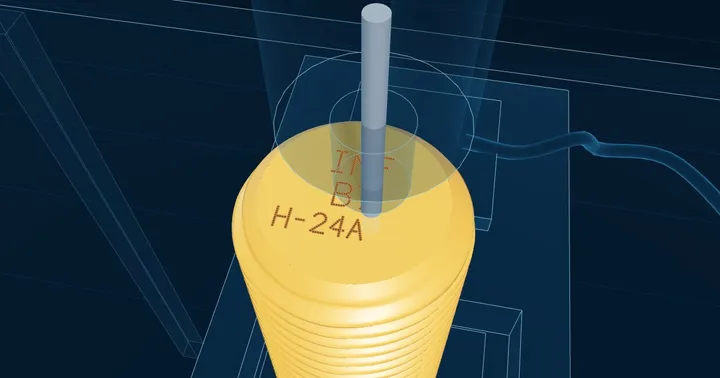
Each blank keeps the heat identity of its bar through turning, threading and outside heat treatment, until the heat is dot-peen marked on the part itself.
- Larger sections and bundles go to the band saws.
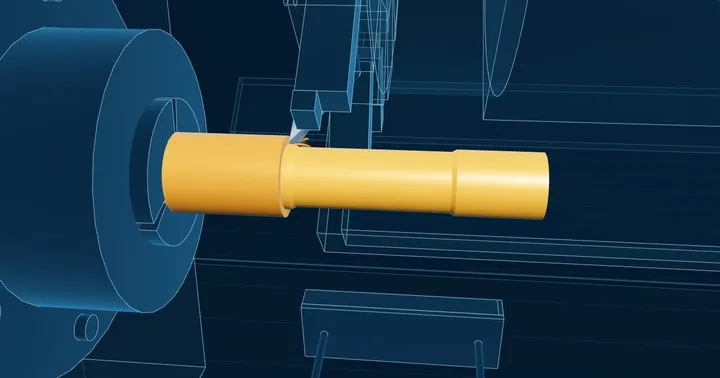
- Parts made on bar-fed lathes are cut from the bar by a parting tool on the lathe, not by a saw.
A fast, clean cut, and the trace behind it.
A carbide-tipped saw cuts fast, with a short cycle, and a sharp disc leaves a clean, true face with very little burr. That suits runs of the same length from the same bar, such as blanks for studs and bolts. A sawn end is still not a finished end: the lathe faces and chamfers it.
Band saws take the larger sections and bundles, usually at a lower cost per cut, so we run both and put each job on the saw that suits it.
Studs machined from heat-treated bar can be certified on the tests made on that bar (ASTM A962), but only if every piece is known to come from that heat and lot. Sour-service grades cut after their last heat treatment (B7M, L7M, 2HM, 7M) go back to the outside heat treater for the final stress relief.
Parts and features.
High-speed circular sawing: common questions.
What does carbide-tipped mean?
Each tooth of the disc has a tip of tungsten carbide brazed onto a steel body. Carbide stands more heat than high-speed steel, so the disc can cut faster; it is also harder and more brittle, so the saw feeds it at a steady rate. The tips can be resharpened.
Circular saw or band saw: which is better?
It depends on the job. A carbide circular saw is fast and leaves a clean face on repeat lengths of bar; a band saw takes larger sections and bundles and usually costs less per cut. We have both.
Does the saw cut change the material?
Not its grade or heat. But B7M and L7M studs and 2HM and 7M nuts must be stress relieved after all cutting and machining, so those parts go back through the outside heat treater after the saw and the lathe.
How does the heat number reach the part?
The heat identity travels with each blank from the saw into the bin tagged with its heat, and through every operation, and is dot-peen marked on the part with the grade and maker's marks.