

Die-head thread cutting
A self-opening die head cuts a thread with a set of chasers: hardened tools spaced round the bar, each with a row of thread teeth. The head runs along the thread once, cutting it to full depth, then springs open so the part comes straight out instead of being unscrewed.

One pass, then open.
- STEP 01
Prepare the end
The bar end is turned to size and chamfered so the chasers start cleanly.
- STEP 02
Close the chasers
The chasers are closed to the thread size and locked. Each has a short chamfer, the throat, ahead of its full-form teeth.
- STEP 03
Cut
The head and the part turn relative to each other. The throat teeth take the cut, each a little deeper, and the full teeth behind follow the thread already cut, so the head moves one pitch along for every turn.
- STEP 04
Trip open
At the set thread length a trip opens the head: the chasers spring outward, clear of the thread.
- STEP 05
Withdraw and reset
The part is withdrawn without reversing the machine, and the head is closed again for the next piece.
- STEP 06
Gauge
GO and NOT GO gauges check the thread to its class: Class 2A unless the order says otherwise (ASTM A962).
- For the best fatigue life, threads are rolled, preferably after heat treatment.
- Acme, buttress and other special forms, and one-off sizes, can be single-point cut on a CNC lathe instead.
- Threading right up to a shoulder needs a short chaser chamfer that cuts nearly full depth on its first tooth, which wears faster; a long chamfer spreads the cut and lasts longer.
Same gauges as a rolled thread, made a different way.
A cut thread is gauged to the same ASME B1.1 class as a rolled one, so it assembles the same way. Because it is cut from full-size bar, the body stays at full diameter: ASTM F1554 sets the minimum body under a cut thread at the thread's minimum major diameter, against the minimum pitch diameter under a rolled one.
Cutting removes metal instead of moving it, so the grain of the bar is cut across at the thread flanks and the root is not cold-worked. That costs fatigue life: in one published test on M12 alloy-steel bolts, cut threads reached about 40% of the fatigue strength of rolled ones. Where a joint is loaded on and off, the order can call for rolled threads.
Rolling stops where a thread is too big to form by moving metal. A die head removes the metal instead, so it carries on into large diameters and coarse pitches, and it cuts materials too brittle to cold form. Chasers are made for taper pipe threads and in left- or right-hand.
Parts and features.
Die-head thread cutting: common questions.
Is a cut thread weaker than a rolled one?
In tension the specifications set the same strength for both. In fatigue it is weaker, because the grain is cut across and the root is not cold-worked: one published test on M12 alloy-steel bolts put cut threads at about 40% of the fatigue strength of rolled ones.
Why does the head open instead of backing off?
So the part can come out without reversing the machine. The head trips open at the set length and is closed again for the next part.
What is the chamfer on a chaser for?
It spreads the cut over the first few teeth so each takes a small bite. A long chamfer gives the best tool life; a short one cuts close to full depth on the first tooth, so the thread can run nearer a shoulder.
Can die heads cut taper and left-hand threads?
Yes: chasers are made for taper pipe threads and in left- or right-hand. Rolling can make both too, so the choice comes down to size, quantity and material.
Before and after it.
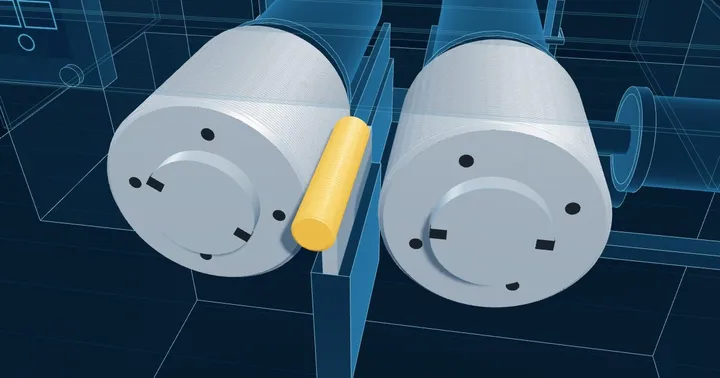
Thread rolling
Threads pressed into the bar, not cut out of it
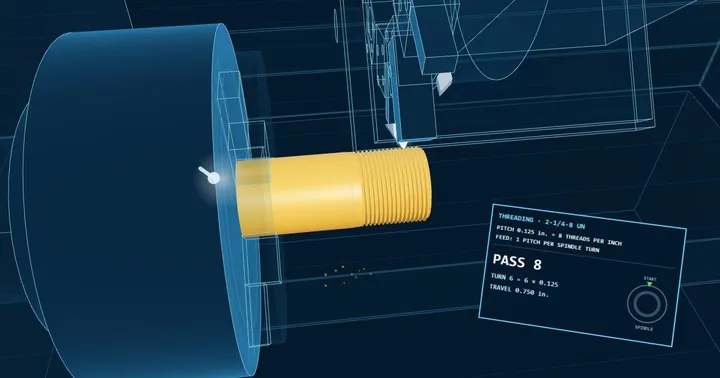
Single-point threading
One insert, many passes: any size or form on a CNC lathe
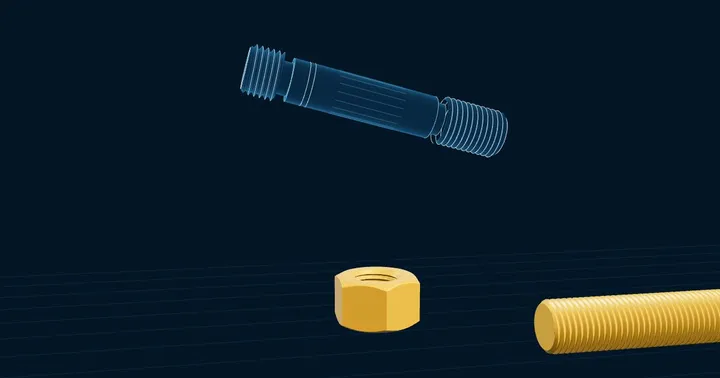
Thread gauging and dimensional inspection
Threads are checked with Go and No-Go ring and plug gauges, and pitch diameter is measured by the three-wire method or on a thread comparator. Heads, flats, lengths and radii are measured with calibrated instruments and, for complex parts, on the CMM.
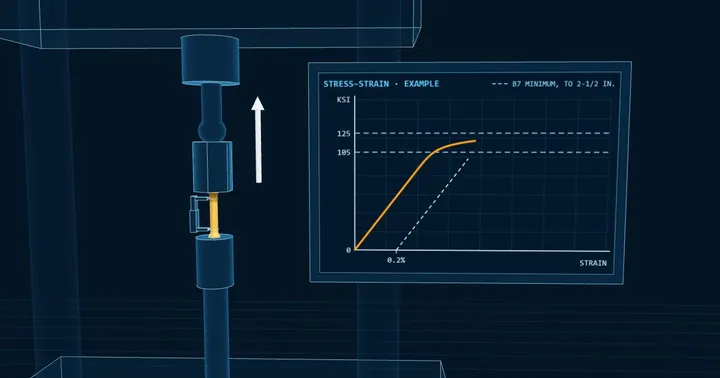
Tensile testing
The full-size fastener is pulled to failure to prove the load it carries, and a specimen machined from the lot gives tensile strength, 0.2 percent offset yield, elongation and reduction of area. All are compared with the grade's table by diameter.