

Emergency B16, A453 660 & 422 Turbine Studs — Houston, 24/7
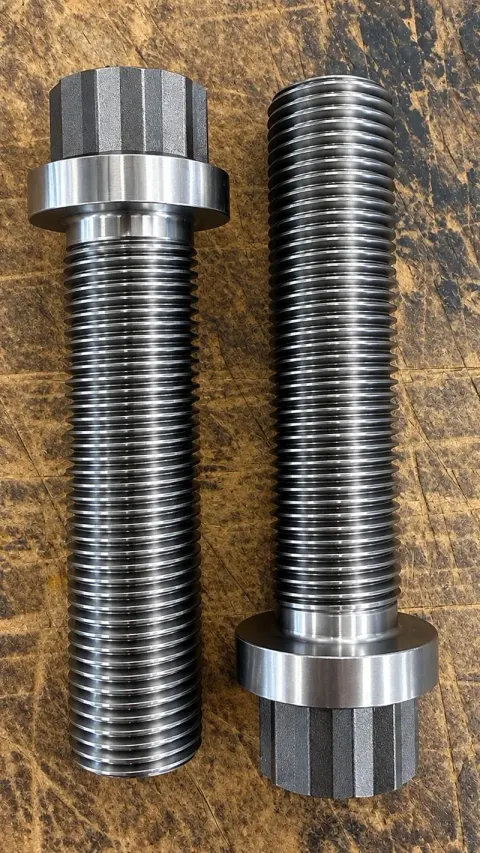
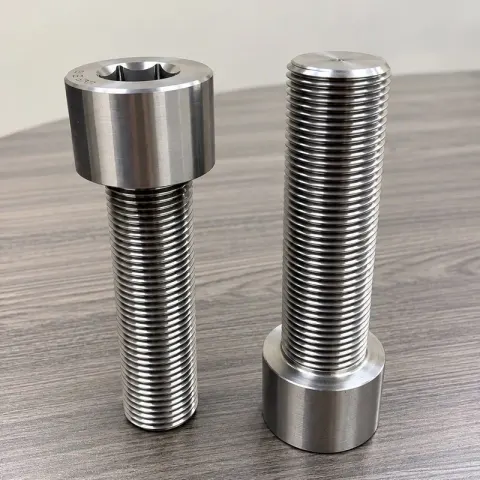
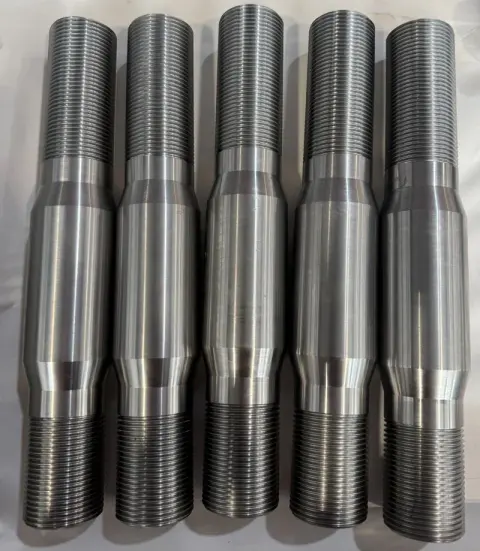
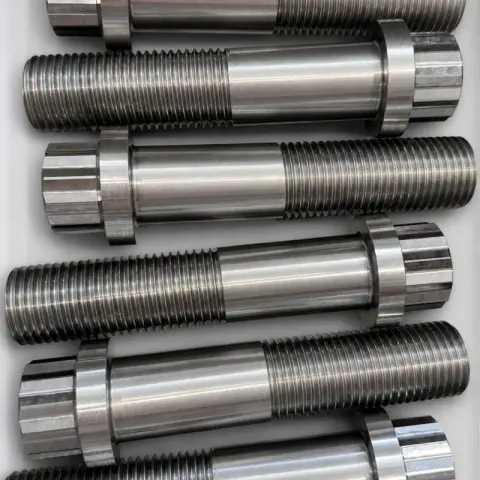
We machine turbine studs, double-end studs, collar bolts and nuts for steam turbines, gas turbines, HP steam flanges and hot refinery service in A193 B16 and B5, A453 Grade 660 (A-286), 422 stainless and Inconel X-750 and 718, to the OEM drawing or from the old part. Call 832-446-3442, answered 24/7, when an outage turns up a damaged stud.
B16 bar is quenched and tempered before it is threaded, so B16 studs need no further heat treatment. B5 is quenched and tempered after machining and threading, and A453 660, 422 and the nickel alloys are heat treated to the class or condition ordered; when that is done for your order, it goes to an approved Houston heat treater.
What we make, and what happens after machining.
| Grade | UNS | After machining | Chosen for |
|---|---|---|---|
| A193 B16 | K14072 | Nothing — Q&T bar | Vanadium-strengthened Cr-Mo that holds its strength where B7 starts to relax — steam turbines, HP steam flanges, hot valve bonnets. |
| A193 B5 | S50100 | Q&T after threading, outside | 5 Cr-½ Mo for hot, sulfur-bearing refinery service and P5 piping. |
| A453 660 | S66286 | Heat treated to class | A-286, rated by stress rupture at 1200 °F — gas turbine casing and exhaust bolting, and steam turbines above B16. |
| 422 Stainless | S42200 | Hardened and tempered to condition | 12-chrome turbine stainless with creep strength to 1200 °F; ASTM A565 Grade 616. |
| Inconel X-750 | N07750 | Aged | Strength to 1300 °F for turbine bolting and springs. |
| Inconel 718 | N07718 | Nothing — we hold aged bar | 150 ksi yield to 1200 °F; gas turbine casings and fasteners. |
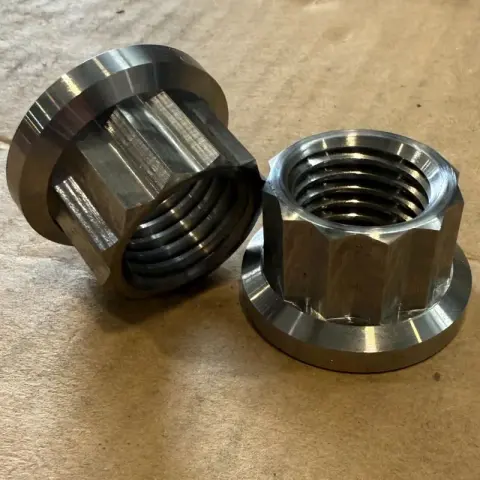
| A194 16 | K14072 | Q&T nut | The Cr-Mo-V nut that matches B16. |
| A194 7 | G41400 · G41420 · G41450 | Q&T nut | Cr-Mo nut, also used with B16 in steam service. |
Where these parts go.
- Steam turbine casing and horizontal-joint bolting (B16, 422).
- Gas turbine casing, combustor and exhaust bolting (A453 660, 718, X-750).
- HP and HT steam flanges in combined-cycle and cogeneration plants (B16).
- Boiler and superheater valve bonnets (B16).
- Refinery furnace and heater bolting and 5 Cr (P5) piping (B5).
So we can start on the call.
- The OEM drawing, the specification, or the part that failed.
- The grade and, for A453 660, the class (A, B, C or D); for 422, the condition.
- Threads, lengths and any marking the OEM drawing calls for.
- Any elevated-temperature tensile or stress-rupture requirement.
B16 is the quickest high-temperature grade.
- B16 from quenched-and-tempered bar is machined, threaded and shipped with no heat treatment step.
- B5, A453 660, 422, X-750 and 718 usually need heat treatment by an outside processor as part of the job.
- ASTM A453 calls for stress-rupture testing on each heat-treat lot of Grade 660; when a lot is heat treated for your order, the test is part of the schedule.
- Copying a stud from the old part adds a measuring step; a drawing removes it.
Heat treatment and coating are done by approved Houston processors, outside our shop. Every lot ships with an EN 10204 3.1 report; certification & traceability.
Order them at the start.
Stress-rupture testing
A specimen is held at a set temperature under a constant load until it breaks; the hours to rupture and the elongation must reach the specified minimums. Bolting specifications use a combination bar with a smooth section and a V-notch of the same diameter: it must break in the smooth section, showing the material is not notch sensitive.
How strong is it at service temperature?Elevated-temperature tensile testing
A machined specimen is heated in a furnace, held at the test temperature and pulled to failure, giving tensile strength, yield strength, elongation and reduction of area at temperature. It is a short test: it shows strength when hot, not how long a bolt will last there.
Is the heat treatment right, and is it soft enough for sour service?Hardness testing
A Rockwell or Brinell indenter is pressed into the part and the indentation measured. Hardness tracks the heat treatment, so it catches an under-tempered lot, and sour-service grades carry a hardness ceiling that every piece must meet.
Any cracks or laps in the surface?Magnetic particle inspection (MPI)
The part is magnetised and dusted with fine iron particles, dry or in a fluorescent suspension. A crack, seam or lap at or just under the surface breaks the magnetic field and the particles gather along it, showing a defect the eye cannot see.
Is the alloy what the paperwork says?Positive Material Identification (PMI)
A handheld X-ray fluorescence analyser reads the chemistry of the finished part in seconds and matches it to the grade. It confirms that a B7 is chromium-molybdenum steel and not plain carbon, that a B8M has its molybdenum, and that a nickel-alloy stud is the alloy on the certificate. Handheld XRF does not read carbon, so carbon is confirmed from the mill certificate or by spark (OES) analysis.
Jobs we’ve made in these grades.
Common questions.
Can you copy a turbine stud from the old one?
Yes. Send the drawing, the spec, or the part that failed. We confirm the dimensions, threads and grade with you before we cut metal.
B16 or B7 for steam service?
B16 adds vanadium and holds its strength at temperature where B7 starts to relax, which is why it is the usual grade for steam turbine and HP steam flange bolting. Use the grade the drawing or plant specification calls for; we do not substitute grades.
Which nut goes with a B16 stud?
A194 Grade 16 is the Cr-Mo-V nut that matches B16; Grade 7 nuts are also used with B16 in steam service. Follow the drawing.
What is A-286?
A453 Grade 660 is the specification grade for A-286 (UNS S66286), an iron-nickel-chromium precipitation-hardening alloy rated by stress rupture at 1200 °F, used for gas turbine bolting and the hottest steam turbine joints.