

Emergency Inconel 718 & Nickel Alloy Stud Bolts — Houston, 24/7
We machine stud bolts, nuts and specials in Inconel 718, 625, 725 and X-750, Monel 400 and K-500, Hastelloy C-276 and C-22, Incoloy 825, 925 and 800H, Alloy 20 and AL-6XN, to size or to drawing, in our Houston shop. Call 832-446-3442, answered 24/7, for an emergency; Gulf Coast deliveries go on our own hot-shot.
Two things set the date: whether the bar is on hand, and whether the alloy is age hardened after machining. Inconel 625, Monel 400, Hastelloy, Incoloy 825 and 800H, Alloy 20 and AL-6XN are used annealed and need nothing after machining. Inconel 725 and X-750, Incoloy 925 and Monel K-500 are age hardened after machining by an approved Houston heat treater, outside our shop; Inconel 718 we also hold already aged.
For Inconel 718 we hold bar that is already solution treated and aged, so an emergency 718 stud can be machined and shipped with no outside ageing step. Where a job needs a size or condition we do not hold, ageing after machining usually adds about a day.
What we make, and what happens after machining.
| Grade | UNS | After machining | Chosen for |
|---|---|---|---|
| Inconel 718 | N07718 | Nothing — we hold aged bar | The high-strength nickel alloy: 150 ksi yield from cryogenic temperatures to 1200 °F; API 6A CRA bolting for sour and HPHT wells. |
| Inconel 625 | N06625 | Nothing — annealed | Seawater, sour gas and mixed-acid resistance; the F468 nickel fastener grade Ni 625. |
| Inconel 725 | N07725 | Aged | Age-hardened 625, NACE listed for sour service — subsea and downhole bolting. |
| Inconel X-750 | N07750 | Aged | Strength to 1300 °F for gas and steam turbine bolting and springs. |
| Incoloy 925 | N09925 | Aged | Age-hardened 825 for sour-gas wellhead and downhole fasteners. |
| Monel K-500 | N05500 | Aged | Monel with more than twice the strength of 400 — pump shafts and subsea fasteners. |
| Monel 400 | N04400 | Nothing — annealed | Seawater, brine and hydrofluoric acid; non-sparking. |
| Hastelloy C-276 | N10276 | Nothing — annealed | Wet chlorine, mixed acids and FGD scrubbers; the F468 grade Ni 276. |
| Hastelloy C-22 | N06022 | Nothing — annealed | Better than C-276 in oxidising acids and ferric and cupric chlorides. |
| Incoloy 825 | N08825 | Nothing — annealed | Sulfuric and phosphoric acid, chlorides and hydrogen sulfide. |
| Incoloy 800 | N08800 · N08810 · N08811 | Nothing — annealed | 800 / 800H / 800HT for furnace, reformer and heat-exchanger hardware at 1000–1800 °F. |
| Alloy 20 | N08020 | Nothing — annealed | Sulfuric acid plants, pickling lines and pharmaceutical equipment. |
| AL-6XN | N08367 | Nothing — annealed | 6 % Mo super austenitic for seawater, brine and chlorinated water. |
Where these parts go.
- Subsea, wellhead and Christmas-tree bolting in sour and high-pressure wells (718, 725, 925, K-500).
- Gas and steam turbine casing and hot-section bolting (718, X-750).
- Seawater pumps, valves and offshore fasteners (625, Monel 400 and K-500, AL-6XN).
- Chemical-plant and FGD scrubber bolting in acids and wet chlorine (C-276, C-22, Alloy 20, 825).
- Furnace, reformer and heat-exchanger hardware at temperature (800H).
So we can start on the call.
- The alloy and the specification it is bought to — for example Inconel 718 to API 6A CRA or ASTM B637, Monel K-500 to ASTM F468 — and any hardness limit.
- Size, thread and length, or the drawing, with the thread class if it is not 2A / 2B.
- Sour-service requirements: NACE MR0175 / ISO 15156 and the hardness it sets.
- The nut grade, and any tests the specification calls for.
Annealed alloys go straight from the lathe to the box.
- Annealed alloys — 625, Monel 400, C-276, C-22, 825, 800H, Alloy 20, AL-6XN — need no heat treatment after machining, so the bar is the only thing that sets the date.
- Age-hardening alloys — 718, 725, X-750, 925, K-500 — go to an outside heat treater for ageing unless the specification allows machining from bar already in the aged condition.
- Nickel alloys cut slowly and wear tools hard, so a large quantity takes longer than the same count in B7.
- Inconel 625 and 718 look alike but are not interchangeable; PMI checks every part before it leaves when you ask for it.
Heat treatment and coating are done by approved Houston processors, outside our shop. Every lot ships with an EN 10204 3.1 report; certification & traceability.
Order them at the start.
Positive Material Identification (PMI)
A handheld X-ray fluorescence analyser reads the chemistry of the finished part in seconds and matches it to the grade. It confirms that a B7 is chromium-molybdenum steel and not plain carbon, that a B8M has its molybdenum, and that a nickel-alloy stud is the alloy on the certificate. Handheld XRF does not read carbon, so carbon is confirmed from the mill certificate or by spark (OES) analysis.
Is the heat treatment right, and is it soft enough for sour service?Hardness testing
A Rockwell or Brinell indenter is pressed into the part and the indentation measured. Hardness tracks the heat treatment, so it catches an under-tempered lot, and sour-service grades carry a hardness ceiling that every piece must meet.
Does it meet the strength table?Tensile testing
The full-size fastener is pulled to failure to prove the load it carries, and a specimen machined from the lot gives tensile strength, 0.2 percent offset yield, elongation and reduction of area. All are compared with the grade's table by diameter.
Is the chemistry right, carbon and all?Chemical analysis (heat and product)
The steel mill analyses every heat and reports it on the certificate. A product (check) analysis samples the finished part and measures it by spark emission and combustion, or by ICP or X-ray fluorescence for nickel alloys. The result is held to the grade's limits plus the small product-analysis tolerance the specification allows. Unlike handheld PMI, it reads carbon, boron and nitrogen.
Surface defects on stainless and nickel alloysLiquid penetrant inspection (LPI)
A low-viscosity dye is drawn into any surface-breaking defect, the excess is cleaned off, and a developer pulls the trapped dye back out as a visible line. It does the job of magnetic particle inspection on materials that cannot be magnetised.
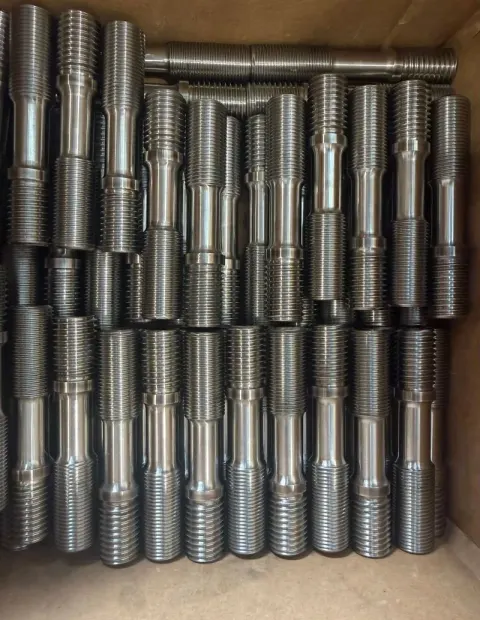
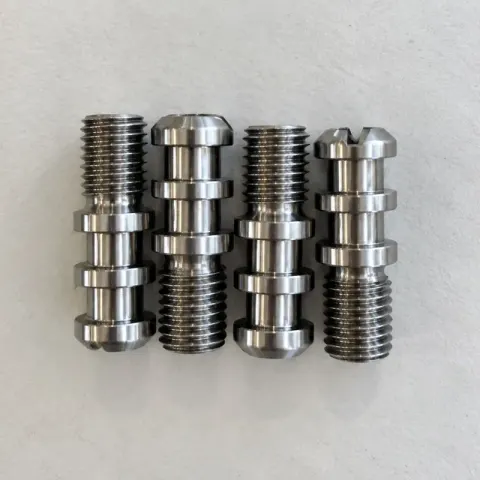
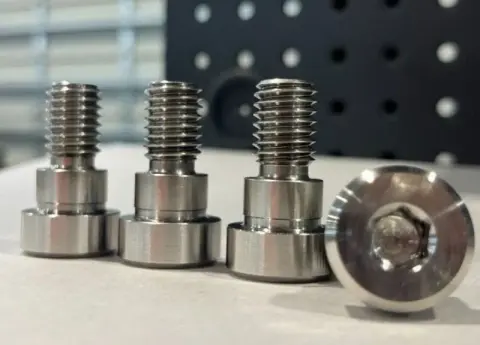
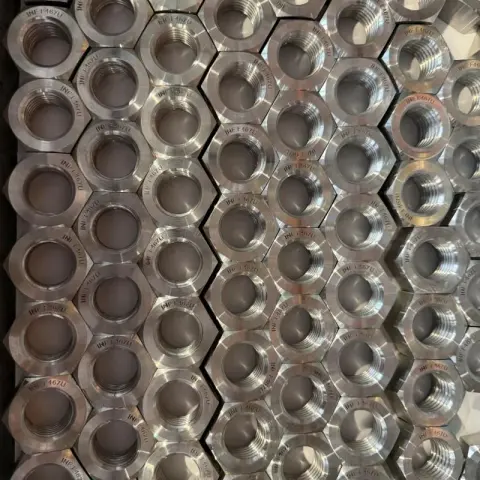
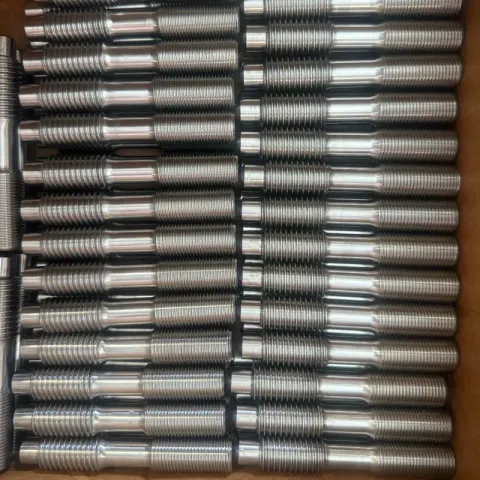
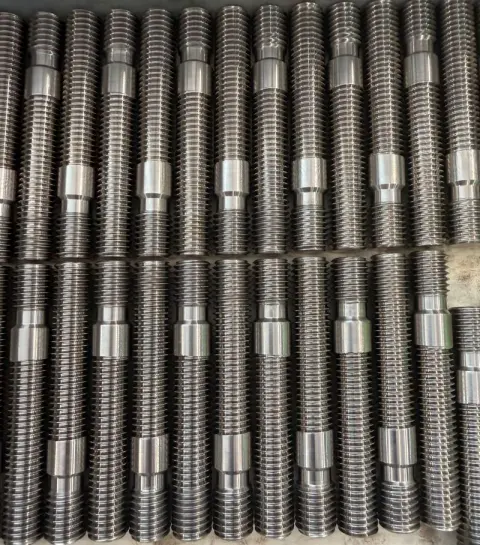
Jobs we’ve made in these grades.
Common questions.
Can you make Inconel 718 studs in an emergency?
Yes. Call 832-446-3442, answered 24/7. We machine 718 studs and nuts to size or drawing in Houston; the date depends on whether bar is on hand and whether the order needs outside ageing, and we tell you on the call.
Is Inconel 718 the same as Inconel 625?
No. 718 is age hardened to about 150 ksi yield; 625 is used annealed, at a much lower strength, and is chosen for corrosion resistance. They look alike, so PMI is worth ordering when both are on site.
Do you supply nickel-alloy bolting for sour service?
Yes. We supply duplex, super duplex, Inconel 718 and Monel K-500 fasteners for CRA applications with the supporting certification. Tell us the standard (NACE MR0175 / ISO 15156) and the hardness limit at the start.
Do you age harden in-house?
No. Heat treatment, including ageing, is done by approved Houston heat treaters. We manage it as part of the job, and the condition goes on the certificate.